ORDERS PLACED NOW WILL BE SHIPPED ON THURSDAY 22nd JANUARY - (more info here)
"There’s a lot to be said for simple, solid, well-balanced coffee, and this is a great example.”
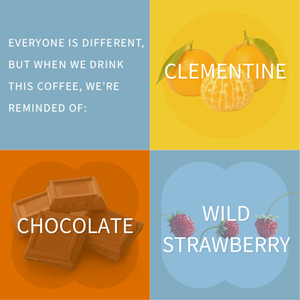
In the cup, you can expect dominant chocolate notes, which take on a different character depending how you brew. In espresso, you can expect an almost ‘powdery’ cocoa type vibe, which is rich but not overly sweet. There’s also a subtle clementine acidity and a hint of wild strawberries, which you’ll also find when brewing using filter methods.
Add milk, and we’re into incredibly luxurious, sweet milk chocolate territory, like a bar of Galaxy. It’s really moreish and a guaranteed people pleaser. This one is going to be spending A LOT of time in our ‘comfort’ hopper. So good.
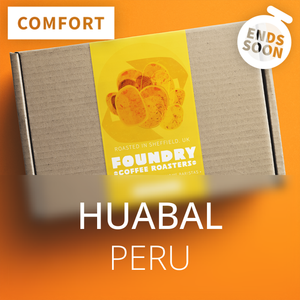
Origin: Huabal, Jaen, Cajamarca, Peru
Varietals: Caturra
Processing: Washed
Roast degree: 127 (read more).
Suitable for: All Brew Methods (read more)
Q Score: 85.5 (what's this?)
You can get more sensory information about the coffee by looking at the diagrams in the images above. If you need to know how these work, just click here.
Taste and flavour perception are complex and difficult to articulate. We love sharing our tasting notes with you, but please don't rely too heavily on our reports. Your experience is what matters most and it may be different. We've written about that whole issue here.
IMPORTANT: Please read our short Coffee Bean Care Guide here.
Want to know more about this coffee? Read on......
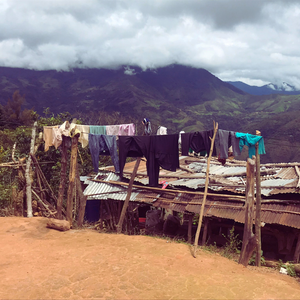
Huabal, in Jaén province (Cajamarca), is a highland district with dozens of smallholder communities scattered along steep ridges and humid valleys. Towns like San Pablo (~1,980 m.a.s.l.) and El Huaco sit in classic Andean coffee terrain: cool nights, frequent rainfall in the wet season (peaking around Nov–Mar), and a marked dry spell from roughly July to September that favours even drying. Farms are typically <2 ha, planted to Caturra, Bourbon and Typica, and most coffees are fully washed, with some producers experimenting with honeys and naturals.
Small, day-to-day parchment deliveries arrive from Huabal communities into the Falcon Coffees warehouse in Jaén. Each delivery goes through physical analysis and cupping; once a lot is cupped, a same-day price offer is made along with a payment by instant bank transfer. Keeping the loop between delivery, evaluation and payment this tight supports cash flow on the farm and ensures that quality (on both physicals and cup score) sets the price. At higher elevations (1,800–2,000 masl), producers commonly deliver clean, sweet profiles.
Falcon Coffees Peru (FCP) was set up in 2019 to work directly with farmers in the northern producing region. FCP was one of the first exporters in the region to pay quality-differentiated prices at the farm gate level. They now operate two northern warehouses (Jaén and Moyobamba) with a 20+ person team sourcing and exporting coffee from 500+ farmers and eight cooperatives. Their sustainability team runs farmer training and productivity work alongside sourcing.
On specialty sourcing, we identify interested farmers, run on-farm baseline surveys, provide training workshops, and give ongoing agronomy support. They commit to buy from programme farmers and pay premiums over the local price according to the quality delivered.
Falcon also run multi-year projects: Falcon Specialty Plus (with responsAbility) to lift cup quality and premiums, showing a +1.32 average score gain, a peak of 88, and 107 producers enrolled to date—and a Soil Health Initiative targeting 600 farmers to improve soils, reduce chemical use, achieve GCP-equivalent certification, and generate farm-level carbon data.